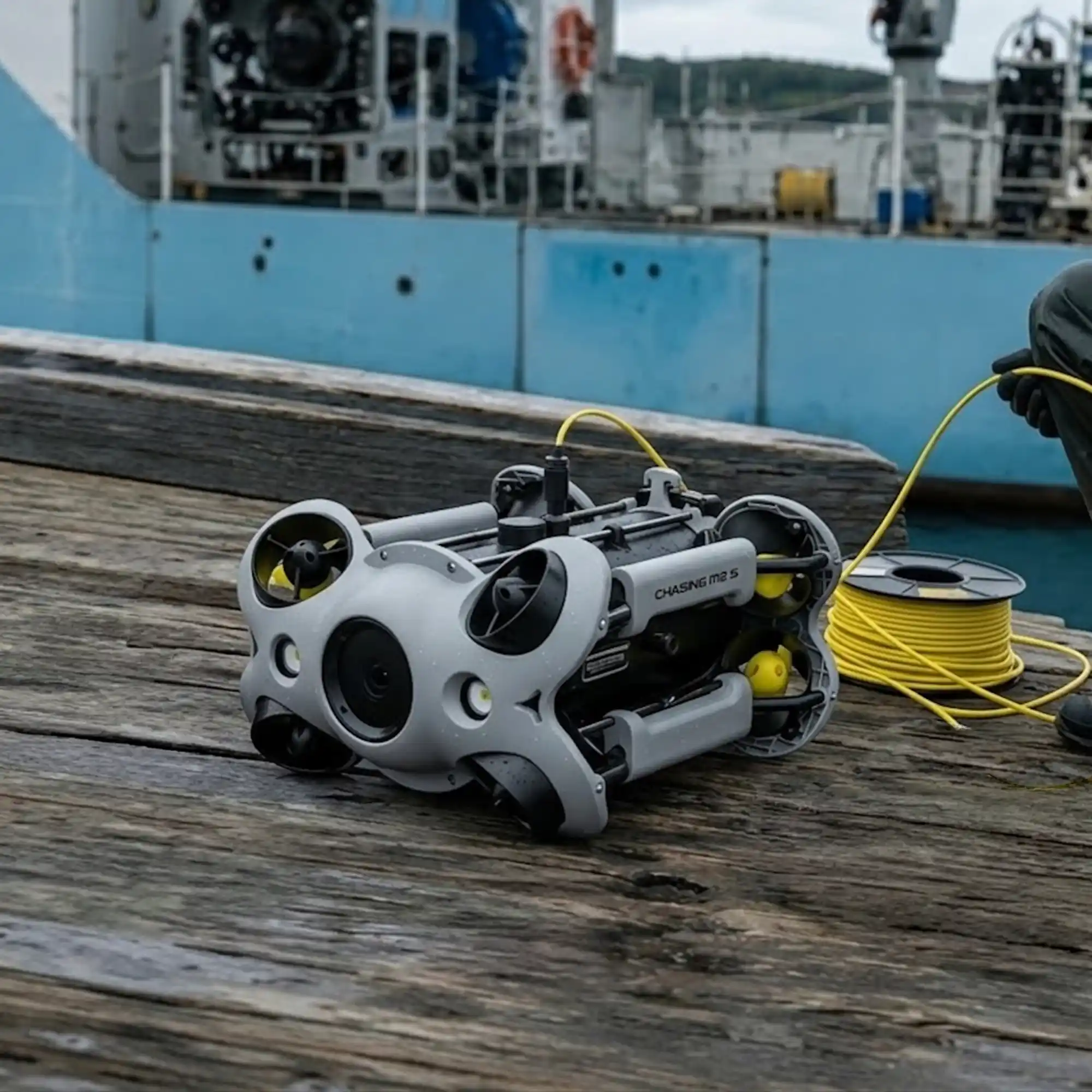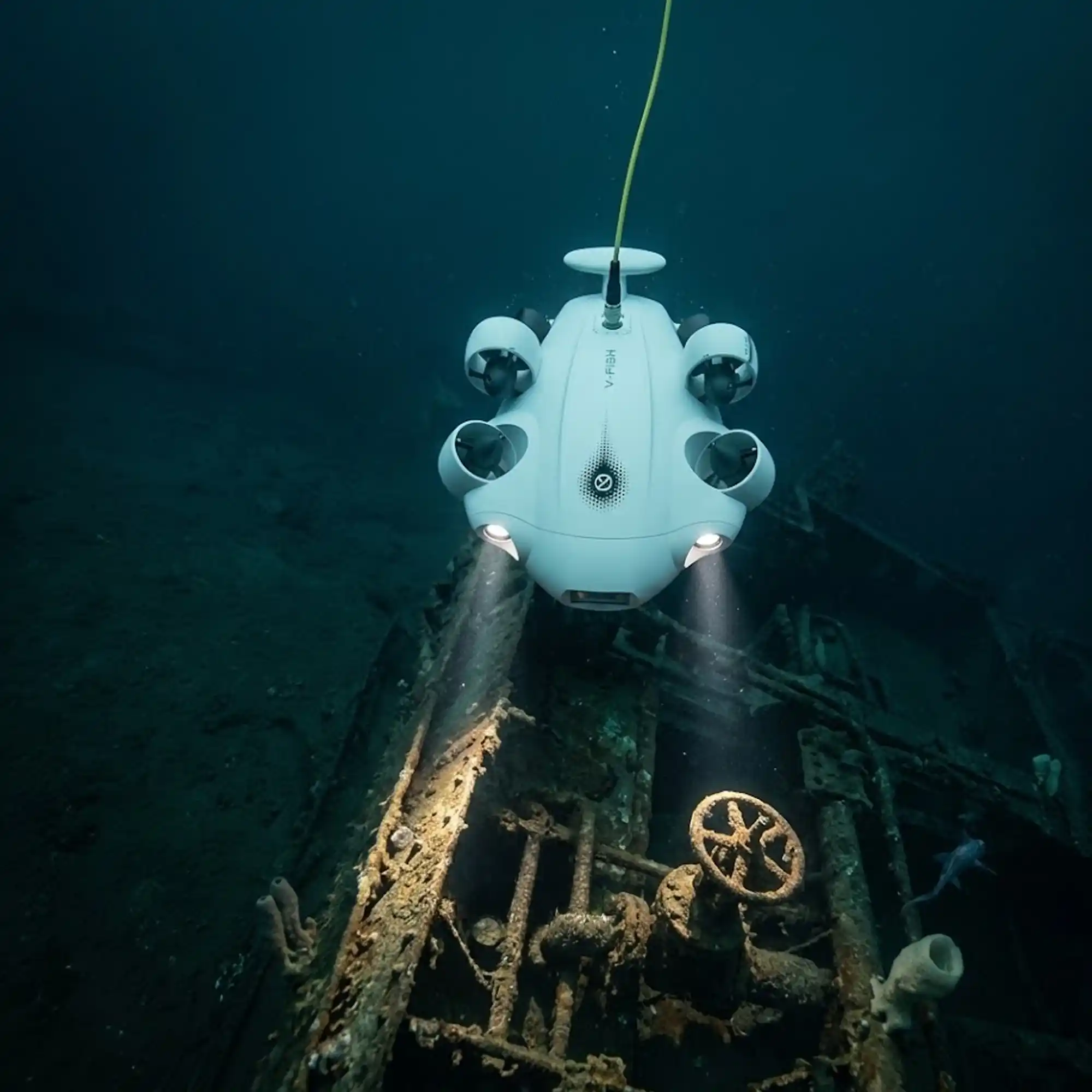






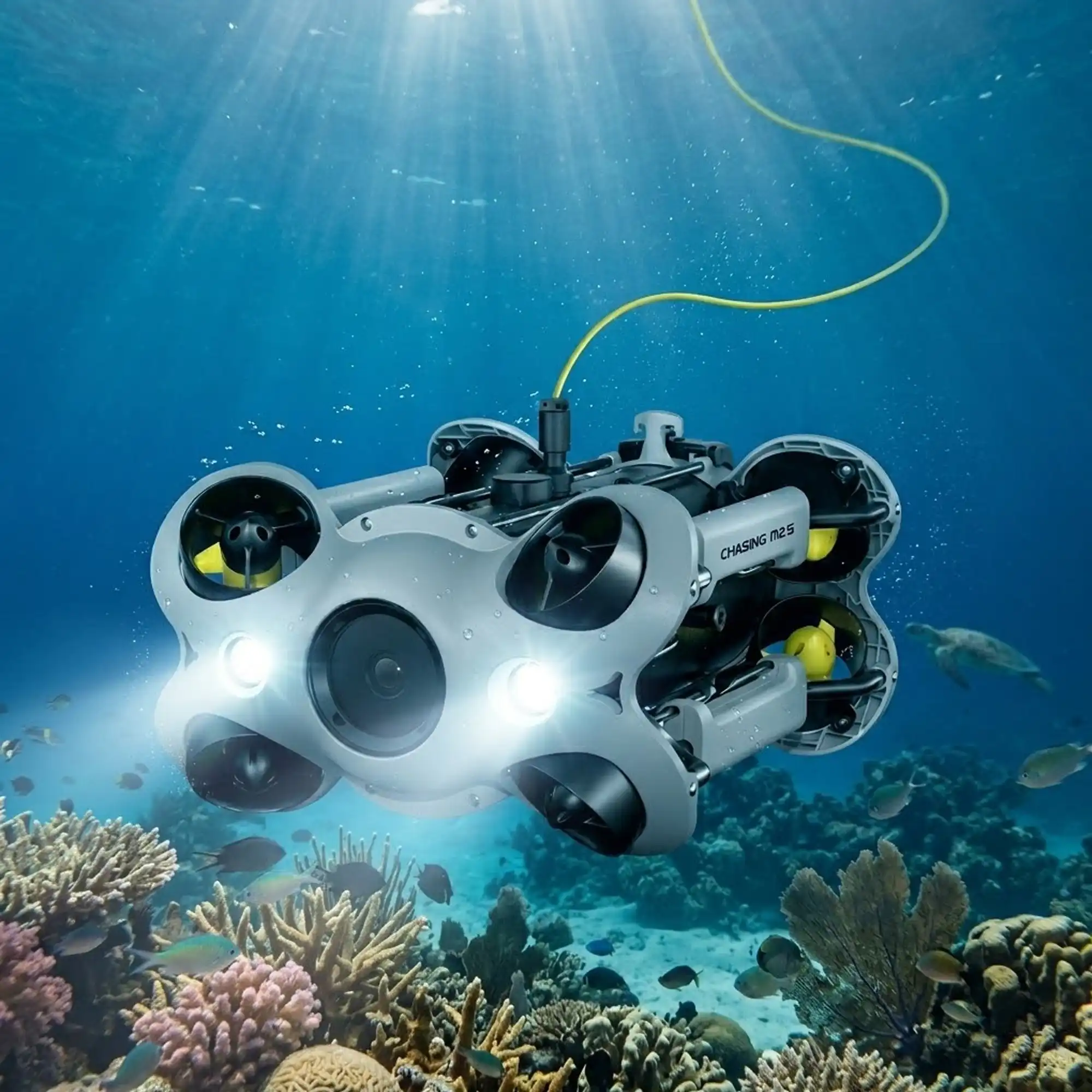
The market for ROV (Remotely Operated Vehicles), or underwater drones, is experiencing rapid growth. Between compact models, industrial solutions, and custom configurations, it's becoming difficult to make the right choice.
Whether for inspection, maintenance or mapping, choosing the right ROV is essential to ensure :
- the success of your missions
- the quality of the collected data
- the profitability of your investment
At ROV Expert, we assist manufacturers, ports, engineering firms, and service providers in choosing and integrating their ROV solution. Here is our comprehensive guide.
1. Define your operational needs
Before choosing an ROV, it's essential to define your application.
Ask yourself the right questions:
- What depth of intervention ?
- What mission type ?
- Visual inspection
- Inspection technique (corrosion, cracks)
- cartography
- intervention
- What environment ?
- clear or turbid water
- current
- Confined space (tank, pipeline)
👉 Dans 80 % des cas, le bon choix dépend directement de votre mission terrain.
2. Essential technical criteria
Maximum depth
- 100 m: standard inspection (ports, basins, tanks)
- 300 m: advanced industrial missions
- 1000 m: offshore
Always plan for a safety margin.
Image quality and lighting
A good ROV must incorporate :
- HD camera minimum (ideally 4K)
- appropriate lighting
- correct stabilization
Image quality is essential for your reports.
Autonomy and power supply
Two main configurations:
- internal battery (2 to 6 hours)
- surface feeding (long missions)
The choice depends on the duration and intensity of your missions.
Control and stability
A high-performance ROV must offer :
- a quick start
- good current stability
- navigation aids
Bad piloting = wasted time and unusable data.
Modularity and scalability
A professional ROV must be able to evolve with your needs.
Sensors and current options :
- sonar
- DVL
- environmental sensors
- manipulator arm
Without modularity, your ROV quickly becomes limited.
3. Consumer ROVs vs. Professional ROVs
Consumer ROV
- affordable price
- easy to use
- limited in performance
Professional ROV
- robust
- scalable
- compatible sensors
- suitable for demanding environments
For professional use, a professional ROV is essential.
4. Sensors: a key element
An ROV without sensors is limited to a simple visual inspection.
Depending on your needs, certain equipment is essential:
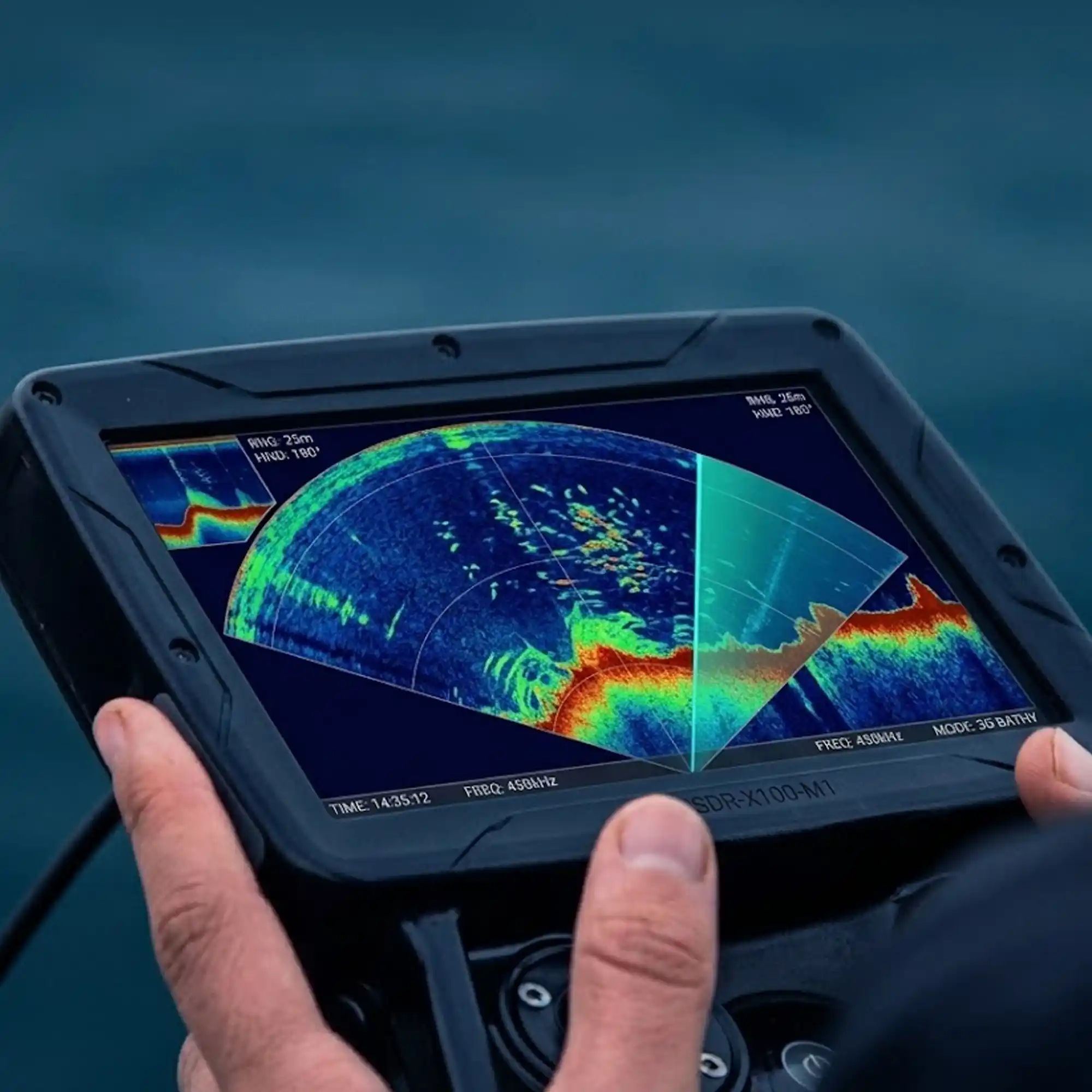
- Sonar visibility in murky waters
- DVL (Doppler Velocity Log) Precise navigation
- USBL (Ultra-Short Baseline) submarine positioning
- GNSS RTK (Global Navigation Satellite System – Real Time Kinematic) by surface centimeter accuracy
The sensors turn an ROV into a true analytical tool.
5. Adapt the ROV to your environment
Each environment imposes its own constraints:
Ports and maritime areas
- cloudy water
- complex structures
👉 Sonar highly recommended
Dams and hydraulic structures
- variable depth
- possible current
👉 Stability and essential lighting
Tanks and pipes
- confined space
- Limited access
Compact ROV: Indispensable
Offshore
- great depth
- difficult conditions
High-performance industrial ROV
6. Purchase, lease or turnkey solution?
Three possible approaches:
Purchase
- initial investment
- rentable in the long term
- total autonomy
Rental
- ideal for one-off missions
- no heavy investment
Full integration
- custom solution
- technical support
- Training included
👉 The choice depends on how often you use it.
7. Budget: What to expect?
Prices vary significantly depending on the configuration:
- Compact ROV: €3,000 – €10,000
- Professional ROV: €10,000 – €30,000
- Industrial ROV: €30,000 – €150,000+
Sensors often represent a significant part of the budget.
8. The Importance of Technical Support
An ROV alone is not enough.
To succeed in your missions, you must have:
- operator training
- from responsive technical support
- of a follow-up and maintenance
- of a possibility of evolution
This is often what makes the difference between a successful project and a failure.
9. Why choose ROV Expert?
ROV Expert supports you every step of the way:
- Field needs analysis
- ROV selection
- Purchase and rental of ROVs
- custom configuration
- training your teams
- Technical support
Our approach is oriented Field result, not just material.
Conclusion
Choosing a professional ROV is more than comparing data sheets.
This is about finding a solution tailored to your missions, your environment, and your objectives.
A good choice allows you to:
- save time
- Improve the quality of your inspections
- secure your operations
- quickly monetize your investment
Need help choosing your ROV?
At ROV Expert, we help you define and integrate the solution best suited to your business.