







Underwater inspection often faces a major problem: visibility.
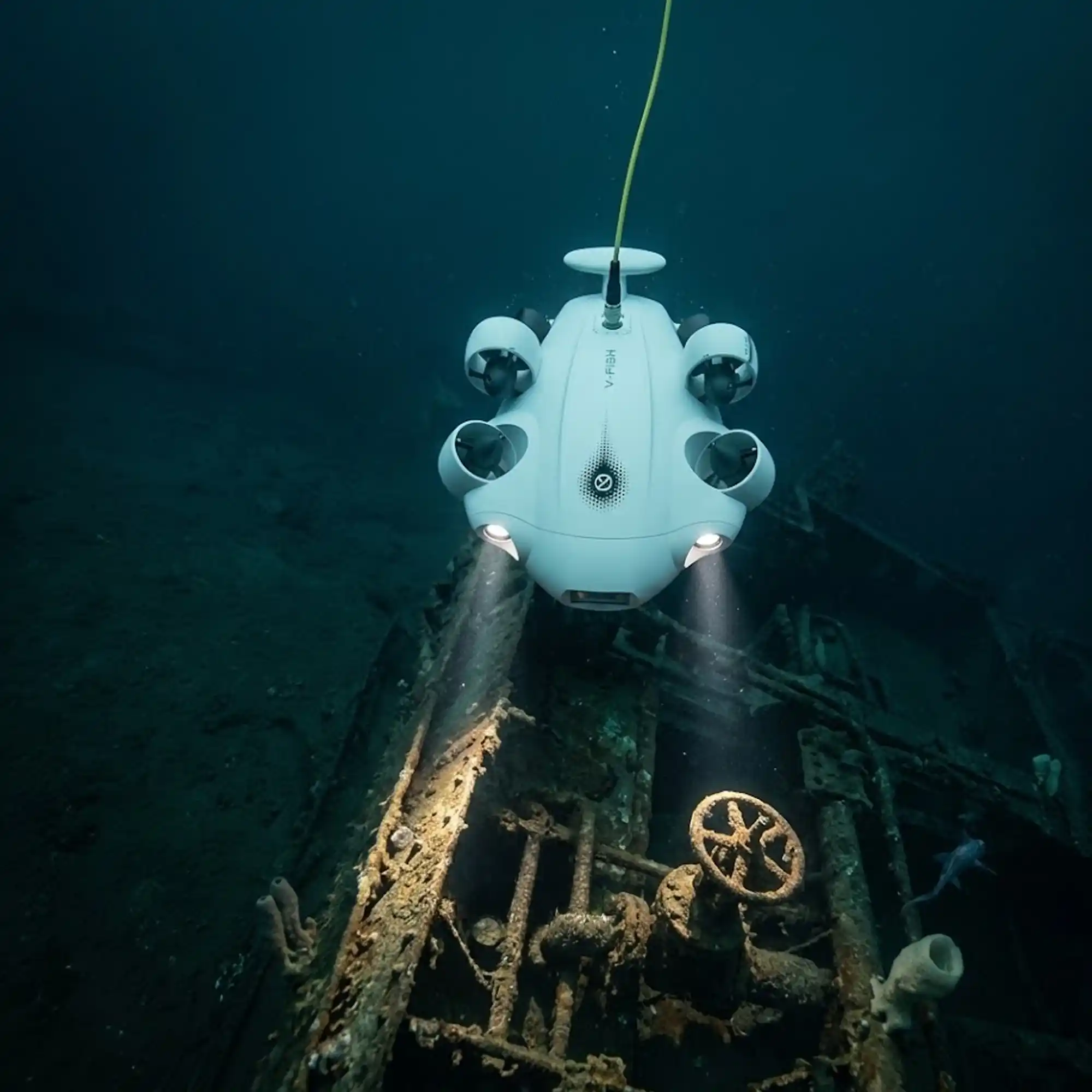
In many professional environments such as ports, rivers, sewer systems, or industrial basins, water is heavily laden with particles and sediments, making visual observation extremely difficult, if not impossible.
However, inspections must continue, even when the human eye and conventional cameras can no longer see anything.
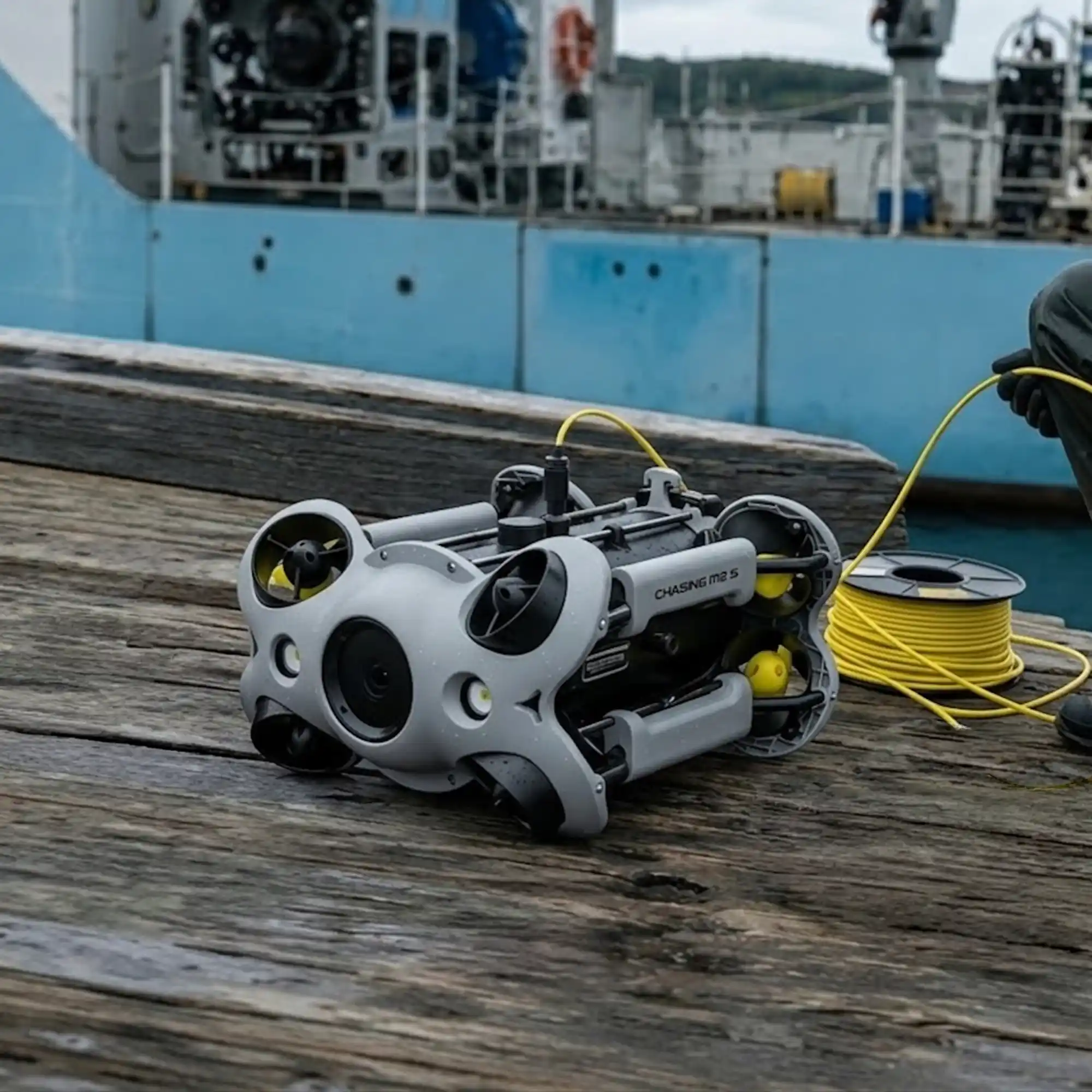
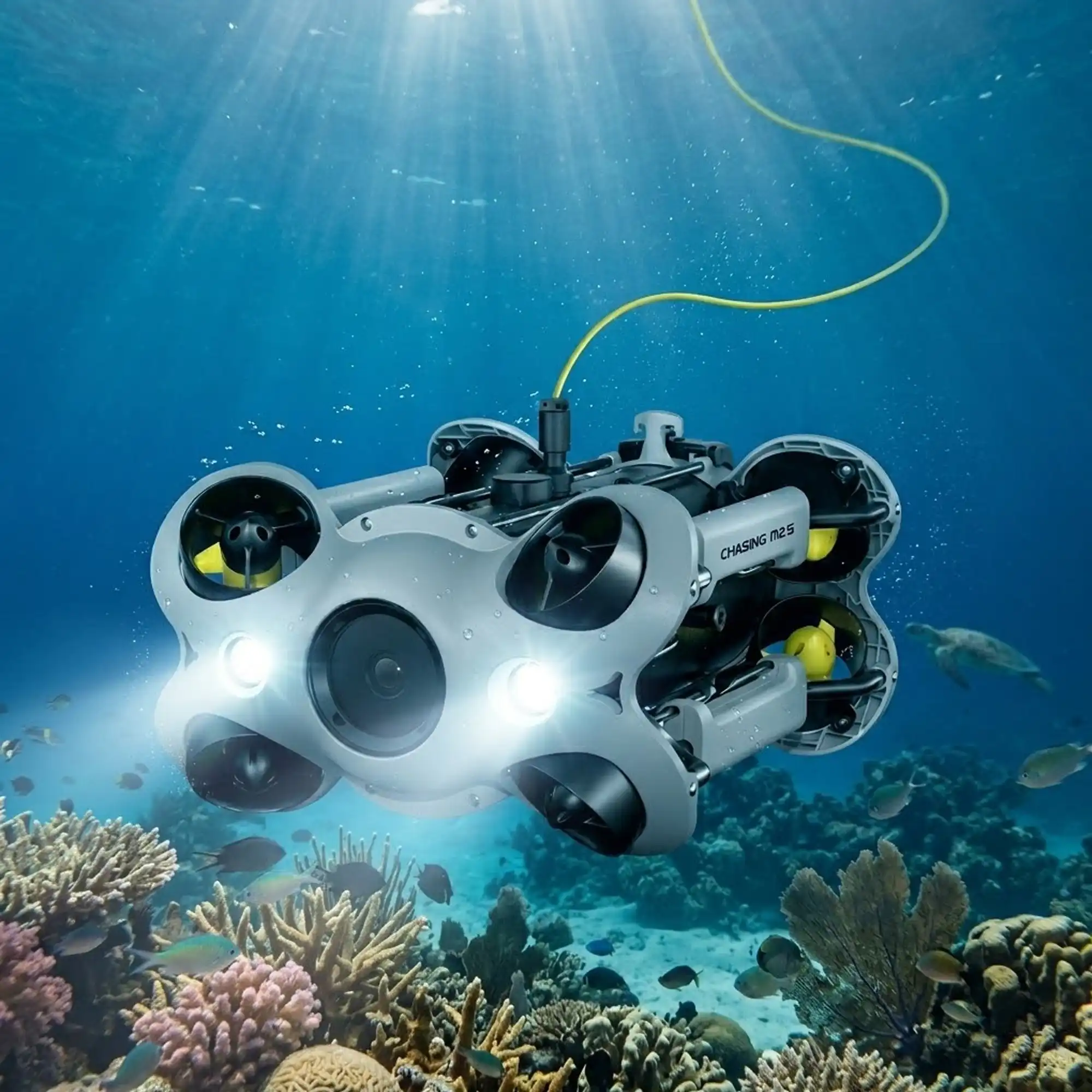
Today, ROVs (underwater drones) can be equipped with sonars and acoustic cameras to perform effective inspections in environments with limited or no visibility.
Why does visibility become impossible underwater?
Unlike the clear waters often seen in underwater videos, professional environments frequently feature:
- suspended sediments
- mud
- fine particles
- of pollution
- disturbances related to currents or industrial operations
- low natural light
Result: the light reflects off the particles and creates a real “white wall” in front of the camera.
Even with powerful lighting, visibility can become completely zero.
Limitations of traditional cameras in murky water
Optical cameras remain very useful when the water is relatively clear.
They allow:
- a precise visual inspection
- defect identification
- detailed video recording
But in murky water, they quickly reach their limits:
- Fog effect
- loss of contrast
- strong light reflection
- very poor visibility
In certain situations, increasing the power of the spotlights even makes the problem worse.
This is where acoustic technologies come in.
Sonar: Inspecting Without Visibility
When the camera is no longer sufficient, sonar becomes a particularly effective solution.
How does sonar work?
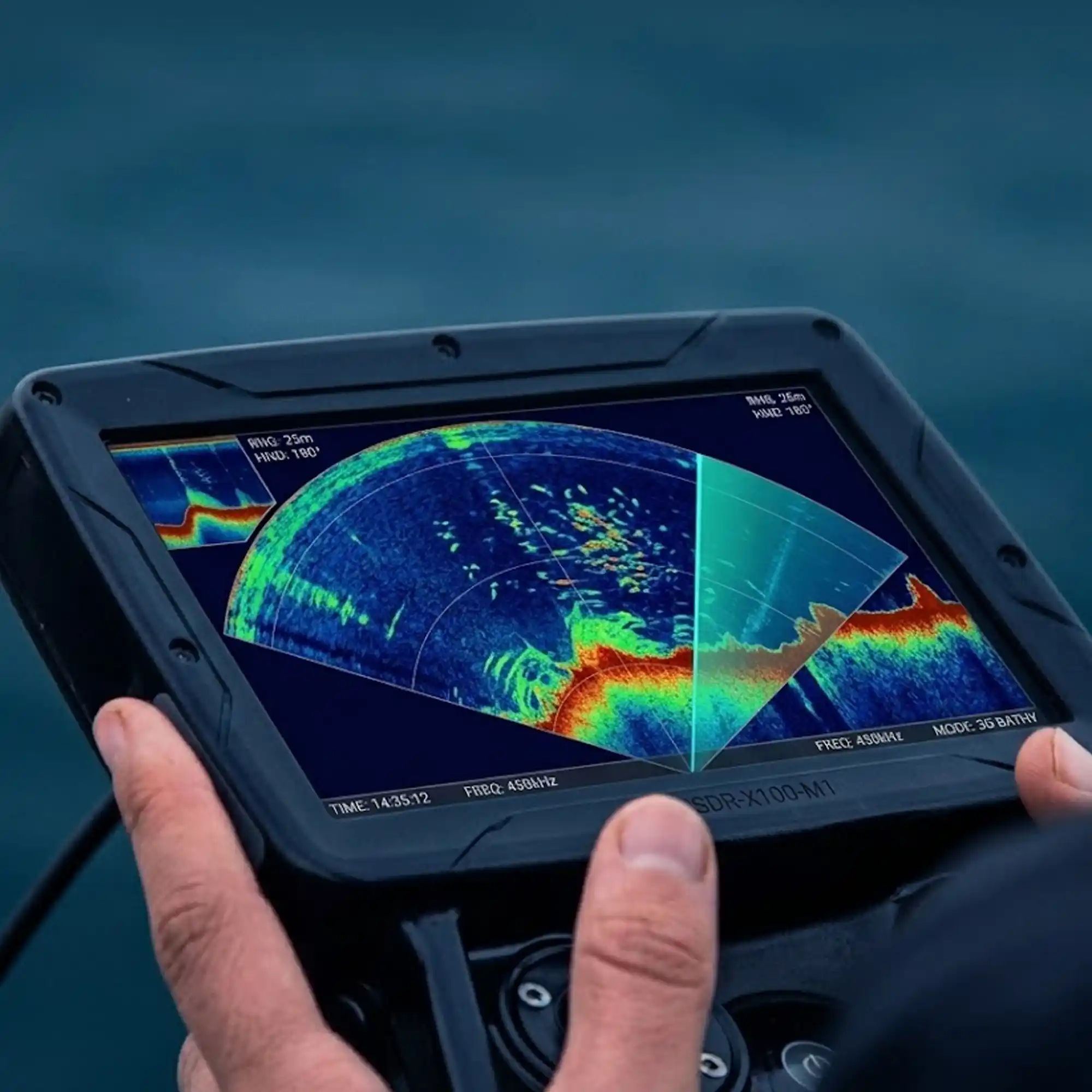
Sonar emits acoustic waves that propagate through the water and then bounce off surrounding structures and objects.
The retrieved data is then transformed into an acoustic image interpretable by the operator.
Unlike a conventional camera, sonar does not need light to function.
The advantages of sonar
- works in zero visibility
- detect submerged structures
- identify obstacles and anomalies
- facilitate ROV navigation
- offers, depending on the type of sonar, a better perception of the environment around the ROV
Sonar is widely used today for inspections in turbid water.
The acoustic camera: an alternative when the video camera is no longer sufficient
Some inspections require more precision than standard sonar.
This is the role of the acoustic camera.
This technology produces detailed acoustic images through high-frequency processing of sonar signals.
It allows in particular:
- to identify precise shapes
- to visualize complex structures
- to detect submerged defects or objects
- to obtain usable images even without light or visibility
In completely opaque water, the acoustic camera becomes a particularly interesting solution.
Adapt equipment to each mission
Each environment presents different constraints.
Before an inspection, several elements must be taken into account:
- turbidity level
- depth
- current
- frame size
- expected precision
- Industrial or port environment
The choice of sonar, acoustic camera, and ROV must be adapted to the mission to ensure actionable results.
Conclusion
Murky water is no longer necessarily a blocking obstacle
Thanks to ROVs that can be equipped with:
- imaging sonars
- acoustic cameras
- and complementary technologies
It is now possible to carry out effective inspections even in totally opaque environments.
These solutions improve safety, inspection quality, and access to hard-to-analyze areas.
Need a solution for your murky water inspections?
At ROV Expert, we support you with:
- Choose the ROV that's right for your missions
- integrate sonars and acoustic cameras
- optimize your underwater inspections